AI in customer service can resolve routine, data-based requests such as order status, delivery information and account questions, but it should escalate unclear, sensitive or high-impact cases to a person.
That distinction matters because a fast wrong answer is not good service. An assistant that only repeats a static FAQ can sound helpful and still be wrong about a specific order. What changes the result is whether the AI reads current records and knows when to stop. That is the approach behind agents in customer service that work from the company's own data.
This article explains what an AI agent can resolve on its own, what it should escalate, what it should never decide alone, how to implement it and how to measure it. If you need the basics first, see what an AI agent is and how it differs from a simple assistant.
A practical guide to the limits of AI in customer service: what it resolves, what it escalates and how to measure it. Reading time: 8 minutes.
In this article:
01 What AI can resolve in customer service today without human help
AI works best when the request is factual, the required data exists and the answer can be checked against a record.
Order and delivery questions
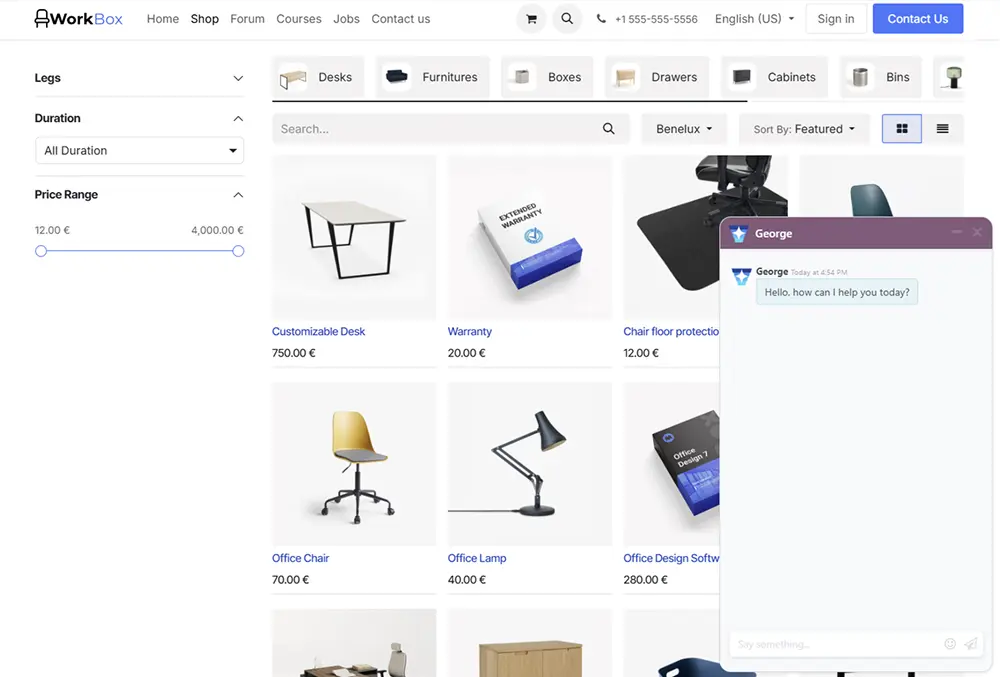
An agent can answer order questions when it can read current order and delivery records. The answer should come from the system, not from a generic knowledge base that someone has to keep updated.
- Order status.
- Delivery status and expected delivery date.
- Available tracking information.
- Products included in an order.
Account and product information
AI can answer standard questions about products, opening hours, account details and documented service conditions, as long as the source is current and approved by the company.
Simple requests with a clear next step
AI can create a support ticket, route a request to the right team or send a document the customer is entitled to. Creating a ticket is not the same as approving a refund or changing a contractual condition.
The channel does not change these rules. Whether the conversation starts in a website chat, by email or with the agent on WhatsApp, the agent should resolve only what the records support.
02 What always escalates to a person
Escalation is not a failure. It is part of a well-designed service workflow.
Complaints and emotional conversations
An agent can acknowledge a request and collect context, but a person should take over when the customer is angry, distressed, repeatedly disappointed or asking for compensation.
Refunds, discounts and financial decisions
A person should review refunds, exceptional discounts, compensation, payment disputes, credit changes and cancellations with financial consequences.
Incomplete or conflicting information
Escalate when the order does not match the customer's explanation, the customer cannot be identified securely, the data is outdated or internal records contradict each other.
Legal, privacy or security requests
A person should handle data access or deletion requests, privacy complaints, security incidents, legal notices and requests involving regulated information.

03 What an AI chatbot should never handle
Some decisions should remain human even when the AI has enough information to make a prediction.
- Whether a customer receives a refund outside the standard policy.
- Whether a complaint is legally valid.
- Whether an account should be blocked.
- Whether a customer should receive a special price.
- Whether sensitive personal information can be disclosed.
- Whether a serious incident is closed.
- Whether a contractual obligation has been fulfilled.
AI can recommend the next step. It should not silently make decisions that affect money, rights, access or the customer relationship.
04 Limits by sector and risk level
These examples organise the limits by sector and by the consequences of a wrong answer or action. The risk level is illustrative: adjust it to your own data, permissions and service policies before using it as an escalation rule.
Sector and situation |
Illustrative risk |
What AI may handle |
Boundary for human review |
|---|---|---|---|
| Retail: product information |
Low if documented and no records change | Read approved product information | Conflicts, safety questions and exceptions |
| E-commerce: an existing order |
Medium if the order could change | Read status and collect the requested change | Financial consequences or changes outside written permissions |
| Logistics: delivery incidents |
Medium if records are incomplete | Share verified tracking and collect details | Lost parcels, repeated failures and compensation |
| Software: account support |
High if access could change | Explain documented steps and create a ticket | Identity doubts, access changes and security incidents |
| Professional services: service scope |
High if a commitment could be created | Explain the approved scope and route requests | Exceptions, contract interpretations and new commitments |
| Retail: refund requests |
High if money could be returned | Explain the documented refund process | Exceptional refunds and disputed transactions |
| E-commerce: personal data requests |
High if personal data could be disclosed | Acknowledge and route the request | Identity verification and decisions on disclosure or deletion |
| Software: serious service incidents |
High if the impact is unresolved | Create a ticket and collect context | Urgent escalation and approval before closure |
05 How to approach implementation in phases
Most problems with AI in customer service start before the first conversation. Five things decide whether an agent helps or creates more work:
- Records it can read. Orders, deliveries, invoices and customer history in a system the agent can query. If the answer lives in someone's inbox, the agent cannot give it.
- A current source of approved information. Policies, product details and service conditions that someone owns and updates.
- Written escalation rules. Which topics always go to a person, who receives them and in which queue. If the rules are not written down, the agent will improvise.
- Permissions. The agent should see only what the role it works for is allowed to see, and nothing more.
- A log of every action. What the agent read, what it answered and what it escalated, so the team can review it.
Phase 1: read-only queries
Start with questions that can be answered from approved, current records without changing them. Limit access to the information needed for each request, check a sample of answers and make the human handover easy to use. Move on only when the team can verify the answers, identify uncertainty and reconstruct the source used.
Phase 2: actions on orders
Add one clearly defined action at a time. Specify who can request it, which records it may change, the checks required and how the team will reverse an error. Keep approval for exceptions and financial consequences, and log both the proposed action and its result. Do not expand permissions simply because the read-only pilot worked.
Phase 3: autonomous closure with a confidence threshold
Consider autonomous closure only for low-risk cases with an observable resolution and an easy route to reopen or reach a person. Define the threshold using reviewed cases and clear evidence requirements; a model's confidence score alone is not proof that an answer is correct. Escalate when information is missing, records conflict, the customer asks for a person or the request crosses an approval boundary. Continue reviewing closed cases before broadening the scope.

06 Five metrics to know whether it works
Do not measure it only by the share of conversations it handles. Measure accuracy, escalation quality and customer outcomes.
Resolution quality
- Whether the answer was correct and used current records.
- Whether the customer needed to repeat the request.
- Whether the ticket was reopened.
Escalation quality
- Whether the AI escalated when it should.
- Whether it escalated too many routine questions.
- Whether the person receiving the case got enough context, or the customer had to start again.
Customer experience
- Satisfaction after the interaction.
- Complaints caused by incorrect answers.
- Time to reach a person when escalation happens.
- Repeated contacts for the same issue.
Control and traceability
- Whether actions are logged and permissions respected.
- Whether the company can reconstruct what the AI read and proposed.
A high automation rate is not the same as good service. A system that escalates correctly can be worth more than one that answers more conversations with less accuracy.
To make these criteria measurable, start with five indicators and keep the same review period and definitions when comparing results:
1. Answer accuracy: correct, source-supported answers divided by the answers reviewed. Record the review sample and the criteria for a correct answer.
2. Required escalations completed: cases correctly handed to a person divided by reviewed cases that required escalation. Track missed escalations separately from unnecessary handovers.
3. Reopened cases: closed cases reopened for the same issue divided by closed cases, within a clearly defined follow-up window.
4. Customer satisfaction: positive responses divided by survey responses after the interaction, reported alongside the number of responses.
5. Time to a person: median elapsed time from the escalation decision to the first human response. Review unusually long waits as well as the median.
07 Frequently asked questions
AI can resolve routine requests based on current records, such as order status, delivery information, account details and standard product questions. It should escalate unclear, sensitive or high-impact cases to a person.
It should hand over complaints, refund requests, security or privacy issues, conflicting data, emotional conversations and any request that requires judgement outside a defined policy.
It can acknowledge a complaint and collect the relevant context, but a person should handle serious, repeated, emotional or legally sensitive complaints.
AI can explain the standard process or recommend an action, but exceptional refunds, discounts and compensation should require human approval.
Records the agent can read, a current source of approved information, written escalation rules, role-based permissions and a log of every action. Start with one channel and a few request types.
Measure answer accuracy, correct escalation, customer satisfaction, repeat contacts, time to reach a person and whether every action is logged.
Automate the routine. Keep the important conversations human.
See how an agent answers from your order and customer records, and hands over what needs your team.
KEEP READING
Related content

Customer service workflows
How an agent uses order and customer context, answers what it can and escalates what needs a person.

AI agent on WhatsApp: how to set it up
How an agent uses order and customer context, answers what it can and escalates what needs a person.
What an AI agent is
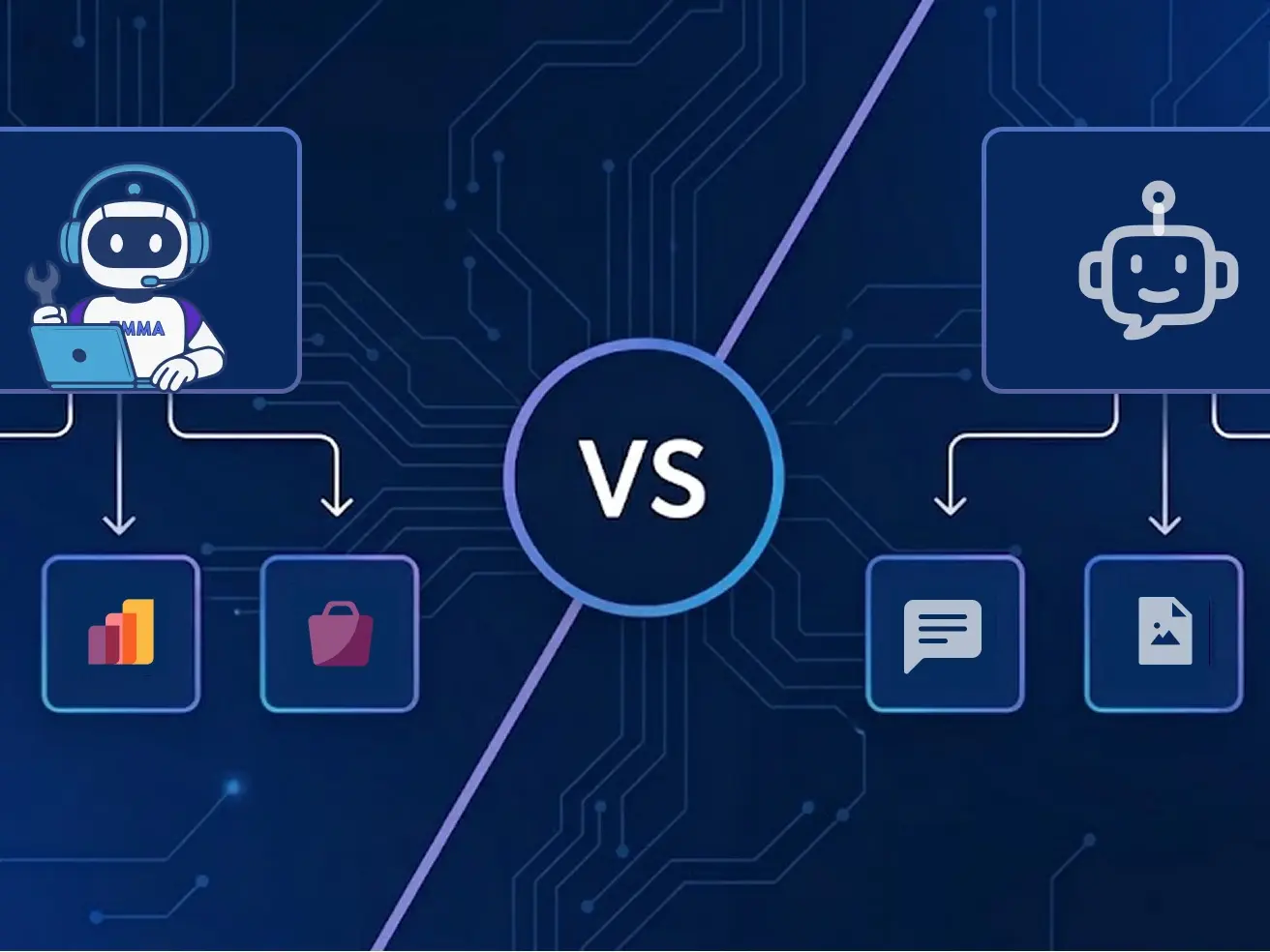
How an agent differs from a chatbot and from a classic automation, and what it can actually execute.
Empiece a escribir aquí...
What AI can and cannot solve in customer service