AI AGENTS · N8N COMPARISON
n8n alternative: when should the AI agent live inside the ERP
n8n is a genuinely strong automation platform, and it's not going anywhere. But when the thing you're automating is really about your business data — sales, invoices, inventory, customers — building and maintaining a flow to reach that data is often more work than it needs to be. Here's an honest, criteria-by-criteria look at both.
See the comparison ↓ Start free with Binhex Cloud
No card needed · No migration required to try it
Trusted by growing businesses from 5 to 500 employees.





Two different answers to "how do I automate this?"
Both are legitimate approaches. The right one depends on where the data you're acting on actually lives.
What it automates
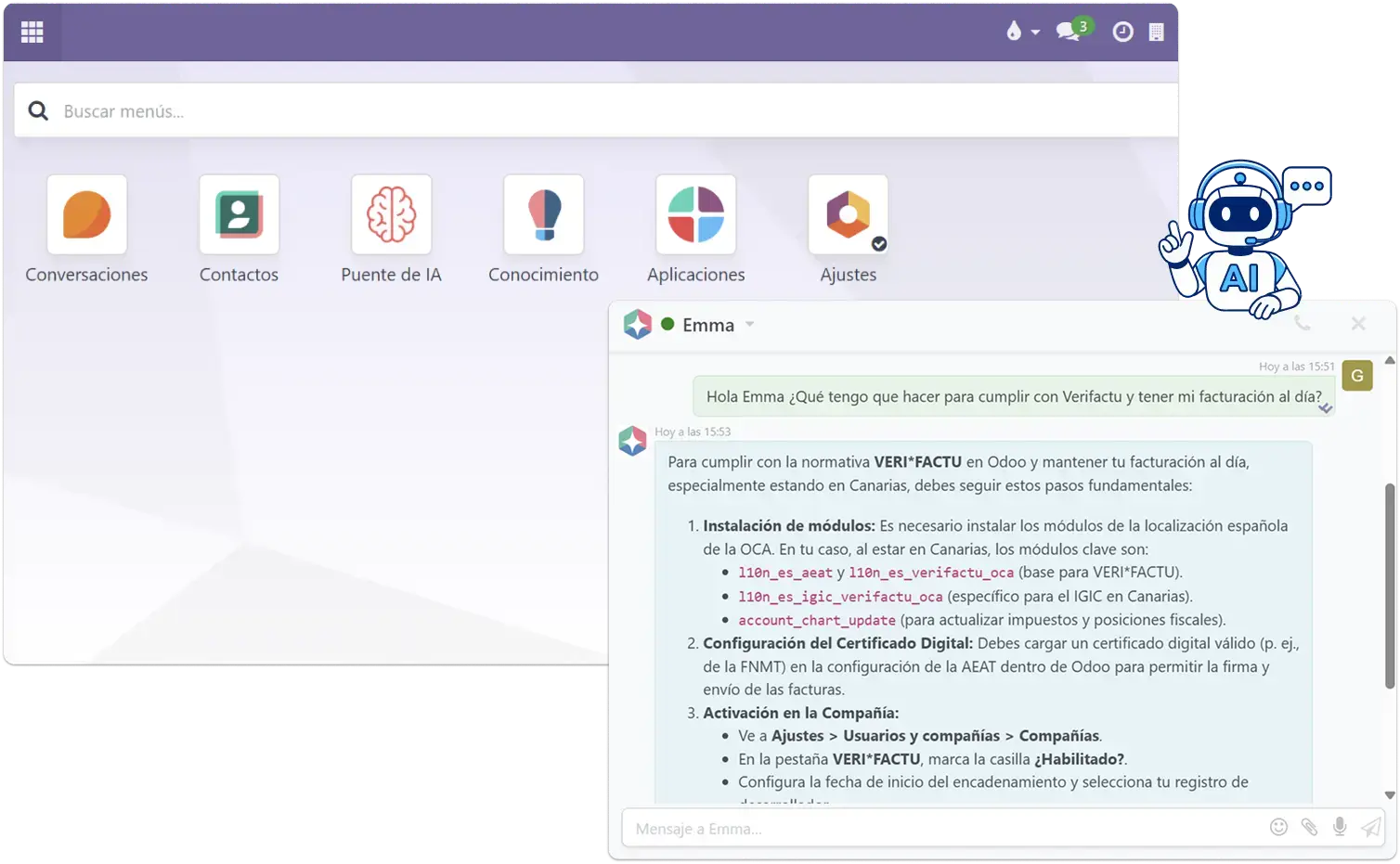
n8n connects apps and APIs through node-based flows you design. An ERP-native agent acts directly on the business data already inside your system.
Where it lives
n8n is separate infrastructure you host and maintain — self-hosted or n8n Cloud. An ERP-native agent runs inside the system you already use, with no separate platform to manage.
What it's built for
n8n excels at orchestrating many different tools outside a single system. An ERP-native agent excels at questions and actions tied to your live business data.
n8n vs an agent inside the ERP — criteria by criteria
Verifiable, checkable criteria — not a marketing scorecard. Where n8n is strong, we say so.
Criteria |
n8n |
Binhex Cloud (Emma AI agent) |
|---|---|---|
| What it is | Open-source workflow automation platform | AI agent built into your Odoo ERP |
| Where it runs | Self-hosted or n8n Cloud — separate infrastructure to manage | Inside the Binhex Cloud instance you already have |
| Connecting to your ERP | Configured per workflow, via API credentials and nodes | Native — same data model, same permissions |
| How you use it | Build a node-by-node flow for each automation | Ask in plain language, no flow to design |
| Maintenance | Flows need review when APIs or node versions change | Maintained as part of the platform |
| Technical skill needed | Flow logic, credentials, debugging node graphs | None — natural language |
| Where it's strongest | Orchestrating many different apps and APIs outside one system | Questions and actions tied to your ERP data |
| Integrations / ecosystem | Large open-source community, hundreds of pre-built nodes | Native to Odoo's data model — no separate integration needed for ERP data |
| Pricing | Free self-hosted tier; paid cloud plans with execution limits | Included with your Binhex Cloud subscription |
Start free with Binhex Cloud See how MCP connects your own AI too
Where each one genuinely wins
Orchestrating tools outside your ERP
If most of what you're automating lives outside a single system — syncing marketing platforms, routing chat notifications, scraping data, connecting niche APIs that have nothing to do with your ERP — n8n's flexibility and integration library are hard to beat. It's open source, has a large community, and gives you full control over the logic.
n8n is a good fit if you have (or want) a technical team building and maintaining custom automation logic across many unrelated tools.
Anything tied to your business data
When the task depends on your live business data — customers, invoices, stock, projects — building an n8n flow means first building and maintaining a connection to your ERP's API, keeping it in sync with your permissions, and rebuilding the flow every time the question changes.
An agent that already lives inside the ERP skips that integration layer entirely: it reasons directly over your data model, respects your existing user permissions, and answers new questions without a new flow for each one.
Which one fits your actual scenario?
- You're gluing together many unrelated SaaS tools (marketing, chat, scraping, niche APIs).
- You have a technical team that wants to build and own custom automation logic.
- Most of your data doesn't live in your ERP to begin with.
- Your automation is fundamentally about sales, invoices, inventory or customers.
- You want to ask questions and take actions without building or maintaining flows.
- You'd rather not run and patch a separate automation platform.
No need to choose blind. Try the agent that lives in your ERP.
Start free and see whether an ERP-native agent covers what you're currently building in n8n.
Questions about n8n vs an ERP-native agent
No. n8n is a solid, widely used open-source automation platform with a large integration library and an active community. It's genuinely strong at orchestrating many different apps and APIs. The question isn't whether n8n is good — it's whether your specific automation is really about connecting external tools, or about acting on data that already lives in your ERP.
It means the agent shares the same data model and the same user permissions as your ERP, instead of connecting to it through an external API. There's no separate flow to build or credentials to configure for each question — the agent reasons directly over your live business data.
No. They solve different problems. Many businesses keep n8n for orchestrating external tools (marketing platforms, chat, scraping, niche APIs) while using an ERP-native agent for anything tied to sales, invoicing, inventory or customers.
Binhex Cloud runs on Odoo Community, which is open source. Emma is the AI layer built on top of that platform.
That's exactly where n8n's strength is. Connecting tools that live outside your business data — chat notifications, marketing platforms, scraping, niche APIs — is what n8n was built for, and it does it well.
n8n requires building and maintaining node-based flows: logic, credentials, and debugging when APIs or node versions change. An ERP-native agent like Emma works in plain language — no flow to design or maintain.
It depends on usage and plan. n8n has a free self-hosted tier and paid cloud plans with execution limits. Emma is part of your Binhex Cloud subscription.