
The manufacturing industry demands precision, planning, and control at every stage of the production process. To remain competitive, companies need more than isolated systems or spreadsheets.
A manufacturing ERP integrates production, inventory, purchasing, finance, and sales into a single platform, providing real-time visibility and complete operational control.
Today, having an industrial ERP is not just a technological advantage — it is a strategic pillar for improving profitability, reducing waste, and making decisions based on reliable data.
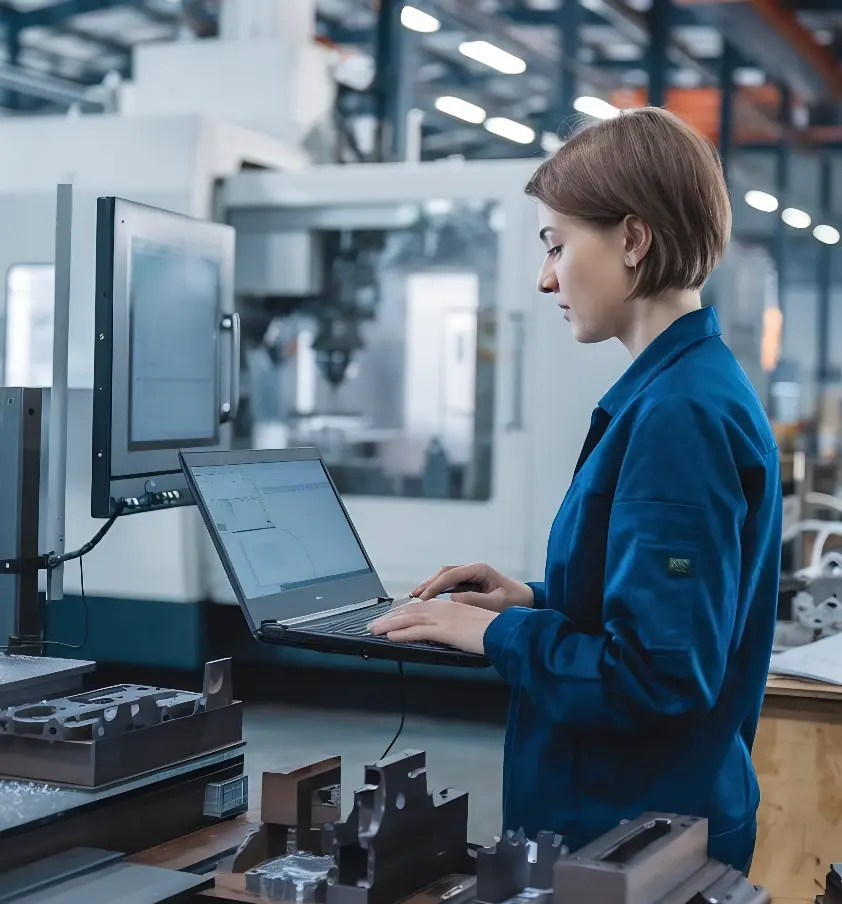
Common challenges in manufacturing companies
Many industrial plants continue to face structural issues that directly impact profitability:
❌ Lack of traceability for raw materials and finished products
❌ Unclear or inaccurately allocated production costs
❌ Inefficient production planning
❌ Dependence on spreadsheets and disconnected systems
❌ Duplicated or inconsistent information across departments
These challenges often result in material waste, delays, cost overruns, and decisions made without trustworthy data.

What should an ERP offer for this industry?
An industrial ERP must be specifically designed to handle the complexity of production processes. Key features include:
MRP and production planning
Material Requirements Planning (MRP), production capacity management, scheduling, and demand forecasting to prevent bottlenecks.
Manufacturing order management
Full control over production orders, actual vs. planned consumption, labor time tracking, and process status monitoring.
Cost control by batch, order, or product
Clear visibility into manufacturing costs, including raw materials, labor, and overhead expenses.
Full traceability
Tracking materials from inventory entry through to the final product — essential for quality control and regulatory compliance.
Integration with inventory and finance
Real-time connection between inventory, accounting, and production, eliminating errors and rework.
Direct benefits for manufacturing operations
Implementing a manufacturing ERP has a direct impact on day-to-day plant operations:
- ✅ Reduced waste and scrap
- ✅ Improved delivery times and realistic planning
- ✅ Accurate production cost control
- ✅ Greater operational efficiency
- ✅ Reliable information for decision-making
The result is a more predictable, profitable, and scalable operation.
Data-driven manufacturing: the next level
An industrial ERP does more than automate processes: it transforms operations into a continuous source of strategic information.
It enables real-time measurement of:
- Productivity per line or work center.
- Operational efficiency.
- Profitability by product or customer.
- Cost deviations.
- On-time delivery performance.
This lays the foundation for a more digital, connected, and data-driven manufacturing model aligned with Industry 4.0 principles.
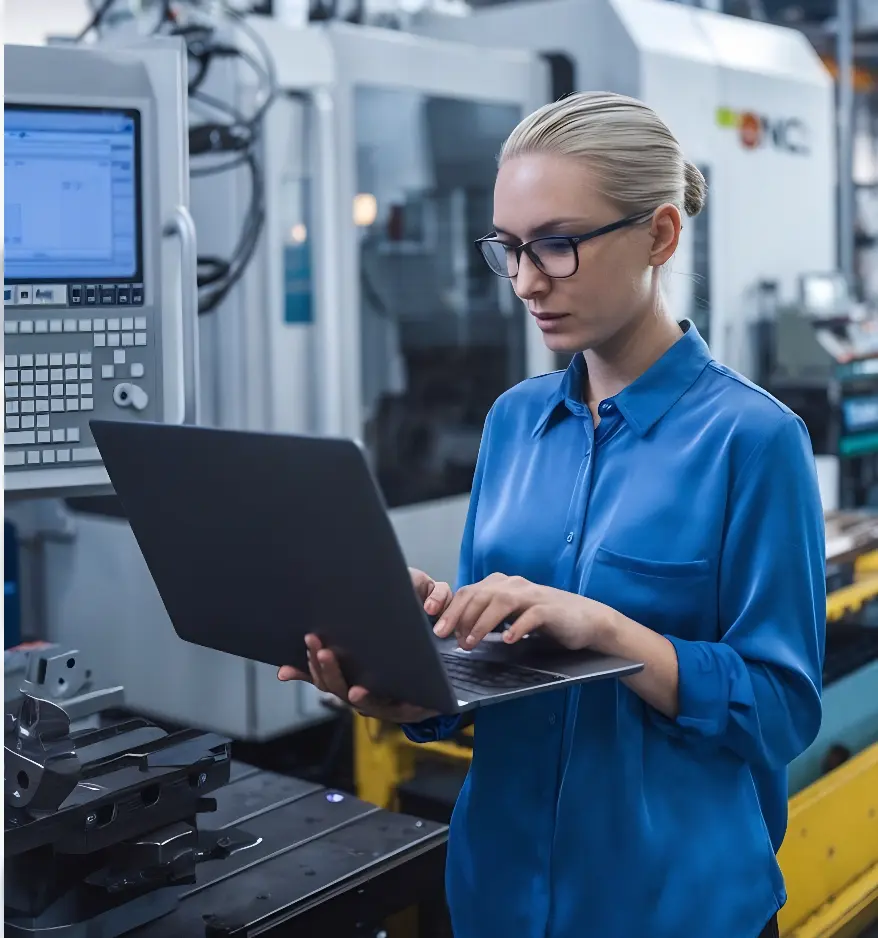
Binhex and ERP for Manufacturing
At Binhex, we support manufacturing companies in their digital transformation through robust, scalable ERP solutions tailored to industrial realities.
Our approach goes beyond technology implementation. We focus on:
- Aligning the ERP with real production processes
- Ensuring reliable data from day one
- Scaling the system as the business grows
👉 Binhex helps manufacturers regain control over their production, costs, and profitability with ERP solutions designed specifically for industry.
Let’s talk about your project
Does your business have a complex operation that doesn’t fit into standard systems?
At Binhex, we help companies adapt their ERP to the reality of their operations, while maintaining control, traceability, and a long-term vision.
ERP for Manufacturing